

September 2026: A Note from Us
Questions about the fate of humanity are taking up a lot of brain space this month, at least for us. As we write this note, AI leaders are meeting at the White House to casually agree to monitor their own safety risks, while, simultaneously, news that OpenAI ignored the security concerns and warnings of employees breaks, discoveries of unauthorized AI hacks mount, and predictions about how soon AI will kill us all swirl on every imaginable platform.
It’s a lot to hold. Yet, the midst of all this chatter about AI and the future of humanity, we’re putting “cognitive surrender” and not killer AI robots at the top of our list of issues event hosts should watch closely. Although a collective definition is still in progress, “cognitive surrender” is the term being used to describe the moment a human gives up an executive or creative task and turns to a machine to provide the “brain power” needed to complete the act. “Cognitive surrender” stories that stood out to us this past month include news that humans are speaking fewer words each year, increased access and use of generative AI tools appears to result in college students reporting feelings of growing isolation and a decline in mastery and confidence, and an argument that the popularity of “brain rot” videos could actually be interpreted as a cry for help in a world dictated by a flood of targeted content trying to monetize your attention. Perhaps unchecked AI advancements have placed us at the cusp of the beginning of the end for humanity, but it’s clear from these stories that we’re already living through remarkable cultural shifts. Event hosts should be paying attention to how these shifts are impacting their audiences and audience needs. That’s why we’re dedicating this issue of our monthly newsletter to ways event hosts can fight back against cognitive surrender, champion bold voices, and protect the future of events.
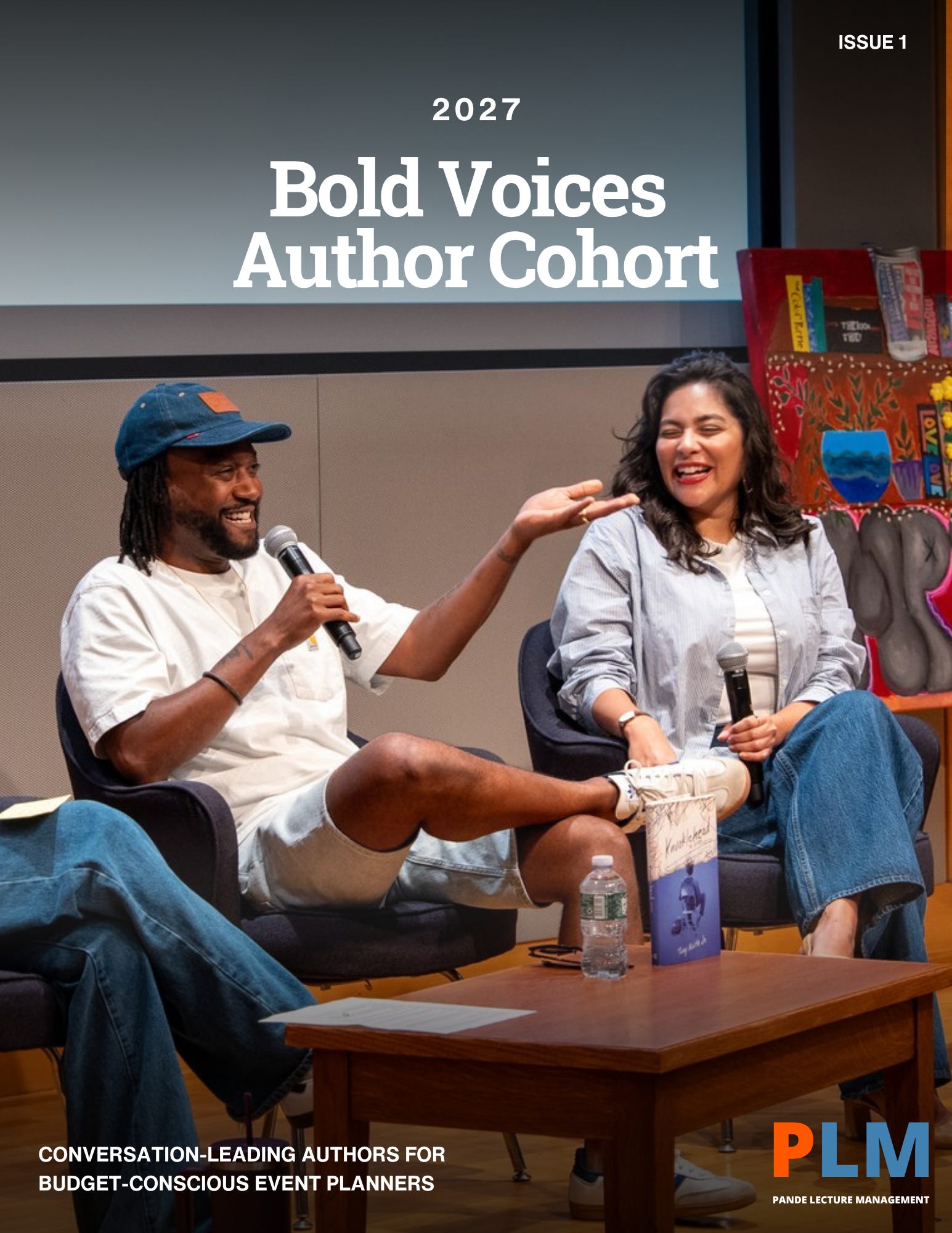
In the midst of all we’re facing, it feels especially timely to announce our inaugural Bold Voices Author Cohort—a remarkable alliance of like-minded authors and speakers coming together in support of event hosts. The cohort highlights acclaimed speakers and authors alongside event suggestions and paired reading materials at transparent, flat rates. One member of the 2027 Bold Voices Cohort is our newest partnered speaker: Wilbert L. Cooper, a remarkable and groundbreaking Black culture visionary, justice reform speaker, and award-winning author of much discussed new memoir The Black Shield: An American Memoir of Family and Power.
Happy reading and remember that we’re rooting for you! —Katharyn & Karuna
Event Trends and Topics on Our Radar this Month
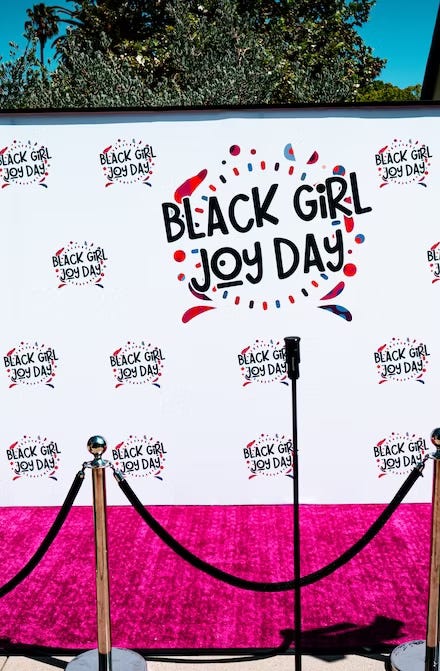
We need more Black Girl Joy Days and other celebrations like it! California has designated Aug. 10 as Black Girl Joy Day, an annual statewide celebration of Black girls’ achievements, talents and potential.
If this idea inspires you, speaker Jamilah Pitts hosts professional developments around equipping communities and schools in support Black girls and Kai Harris loves sharing her story as a foundation for inspiring Black girl joy.
On the return of the telethon! The rise of long-form YouTube content and streaming has potentially primed your audience to enjoy the return of the telethon format or other longer-form variety programs such as a fundraiser or highlighted program. Judy Blume and Kat Radley are testing it out with a national telethon virtual event called “Show Up, Speak Up: Vote for the Freedom to Read” in advance of Banned Books Week in October.
Political decisions and recommended policy changes continue to hint at future hurdles for event hosts in 2027 and beyond. On September 3, the Department of the Treasury and the IRS proposed a new regulation that carries forward the administration’s stance that a private school is not operated exclusively for charitable purposes — and therefore not eligible for tax-exempt status under 501(c)(3) — if it adopts, maintains, or enforces a policy or practice that discriminates on the basis of race, color, or national or ethnic origin. This nondiscrimination requirement would apply to any educational policy, admissions policy, scholarship or loan program, athletic program, or other school-administered or school-supported program. Read the Council on Foundations detailed summary of the proposed rule or review their FAQ on the public policy doctrine for more information.
We recognize that the 501(c)(3) status of schools is a complicated issue, particularly within higher education! Dr. Davarian L. Baldwin’s book In the Shadow of the Ivory Tower: How Universities Are Plundering Our Cities outlines some of the biggest challenges tax-exempt policies can create and how universities can redefine higher education in a way that serves communities. He offers lectures, seminars, and workshops on the topic.
The past few months have made it clear that “Will AI kill us?” themed events and events about AI ethics are not outdated. In fact, expect a new wave of interest in this topic and events focused on addressing this question. If you are planning one of these events, check out our recommended AI and Technology speakers.
Australia is currently investigating a government website breach executed by a rogue Open AI agent. Award-winning mathematician and algorithms expert Noah Giansiracusa appeared on Planet America, an Australian news program, to discuss the risks humanity may face from AI, why a “kill switch” may not be realistic, and how tech companies need to own up and take more responsibility.
Kathryn Hulick is an acclaimed Science and Tech Journalist, AI expert, and beloved children’s author. She wrote one of her first stories about the challenges of creating “nice” AI and concerns about AI safety complications back in 2024. The strategies and challenges discussed still apply to this moment, but she recently wrote new articles about who is to blame when AI goes rogue and a piece about why AI agents are breaking out and going on hacking sprees.
Your favorite podcast is probably also a video now! It’s one of the reasons that on-site podcasting remains one of the more popular new event formats of 2026. In fact, our favorite philosopher and human emotions expert Dr. Myisha Cherry recently relaunched her podcast in a video format in honor of the UnMute Podcast’s 10th anniversary. Check out one of her latest video episodes about staying human in an AI-driven world.
On Planning Events Like You’re Trying to Save Humanity… Because You Might
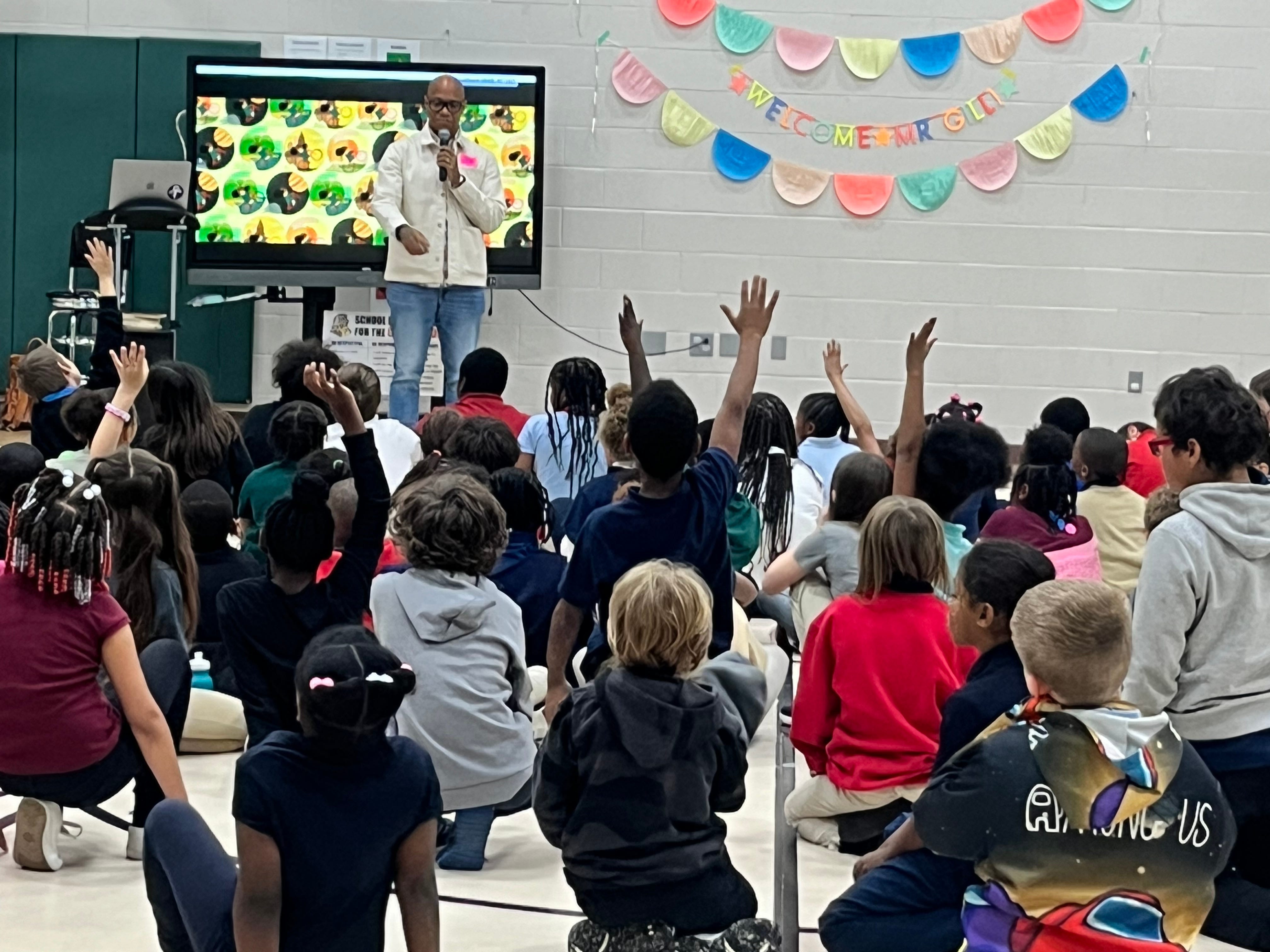
“The response was so enthusiastic and overwhelmingly positive, the teachers allowed the students to remain in the gym to discuss Gill’s presentation instead of dismissing them to their next classes. An impromptu dance party led by the teachers broke out.
It was a joyful feeling…” —an event host in 2024 reflecting on the impact of hosting award-winning cartoonist and author Joel Christian Gill
There’s an oft-quoted idiom “you can’t see the forest for the trees” about being unable to see the big picture because you are so focused on individual elements that make up the big picture.
It can be particularly hard for an event host to step back and reflect on the impact of what they do. There are often incredible moments of breakthrough like the event host reflection shared above, but there is also an nearly unstoppable drive to the next thing: A new programming season to outline, funding to advocate for, or a new event to plan… It can seem never-ending. However, moments of cultural reckoning have a way of encouraging all of us to push pause. It’s time for event hosts to step back and look at the forest!
Moments of cultural reckoning have a way of encouraging all of us to push pause.
In the United States, we seem to be at a crossroads in society: We’re simultaneously dealing with a mounting epidemic of loneliness and isolation—that the US Surgeon General summed up bluntly in 2023, stating, “lacking social connection can increase the risk for premature death as much as smoking up to 15 cigarettes a day”, intense technological development, and a growing decline human confidence and human activities like talking.
In this kind of climate, meaningful events encouraging interaction and dialogue should be on the rise in response to a clear increase in need. Yet, support for facilitating these kinds of event experiences is actually shrinking. Costs are rising and many organizations struggling with budget cuts have made tough decisions to cut programming budgets. A large chunk of grant opportunities are also being eliminated or censored without any similar supports to replace them.
What can event hosts do to fight back (and possibly save humanity)? We came up with four timely recommendations…
How Event Hosts Can Stop the Rise of “Cognitive Surrender” (and Save Humanity)
Keep track of new findings by scientists and record how their impacts intersect with your audience.
We know that you really don’t need another thing to do! But we’re encouraging this strategy because a lot of opportunities to advocate for future programming or fight for more event funding happen during limited pockets of time. When that pocket of time comes, wouldn’t it be helpful to be able to quickly reach for statistics to back up why your request is important?
Make sure the tracking system you choose works for you! Maybe it’s an inbox label, a note on your phone, or a Google doc shared amongst other event hosts you trust. Whichever tracking method you choose, make sure you are able to quickly add a link and a statistic or quote that stuck out to you for when you need to build an argument to protect future events.
Foster micro-moments of connection within your events.
Impactful connection doesn’t have to involve flashy activities. In fact, small moments of connection can often be just as impactful. One of the primary things that’s been lost as society shifts to adapt to the integration of technology are micro moments of connection. These moments include interactions like getting to know a fellow volunteer of a social club, chatting with your clerk at the supermarket, or comparing notes with someone else in line at a midnight release party. Individually, they don’t seem like they matter a lot. (And perhaps sometimes they can feel forced or annoying!) But over time, the cumulative loss of so many minor points of connection is making many of us feel a bit untethered, leading to the rise of the loneliness epidemic we’re still navigating.
Mico-moments of connection in an event could look like:
Prompting fun interest-led conversation by providing cute hobby-oriented stickers alongside attendee name tags at a mingling event
Facilitating interest-led discussion groups following a large event. For example, following a community read event with the author, share out a webpage with discussions built around four topical intersections from the book led by community experts or leaders.
It may seem old school and a bit cheesy, but have your MC encourage in-room dialogue with a prompt encouraging attendees to share with one another either a fun personal fact or what brought them to the event that day.
Encourage thoughtful explorations of “getting it wrong.”
Modern society is a little obsessed with being “right.” We don’t typically like to admit that we’re wrong, even when doing so leads to the most growth and more meaningful outcomes. One of the main reasons students or employees are turning to AI to complete assignments even when they are instructed not to do so is because they are scared of “getting it wrong.” Why waste time on an inferior product or inaccurate answer when AI can do it better?
That’s “cognitive surrender” at work! It’s the valuation of product over process. Of prioritizing output over outcomes. It’s the giving up of human to human connection for results.
Event hosts should consider challenging this mindset with their event planning. Think about creative ways to encourage “mistakes” and “getting it wrong” in a spirit of celebration and in environments that limit embarrassment. This could look like:
An Ask Me Anything style session where audience members anonymously ask the guest expert anything—even the “embarrassing questions”— about a particular topic.
Host a community “mess-tival” that encourages and celebrates trying new art forms alongside fun and messy activities like tie dye or foam parties.
Host a “Human Library” style program that encourages thoughtful dialogue around different identities and beliefs. Without a screen between two humans, understanding and respect are more likely to grow.
Be bold, but build audience to the level of your capacity.
Maybe you just found out your event budget was cut yet again and even guest speaker fees deemed “approachable” feel very out of reach. Maybe you planned the coolest event ever and hoped for hundreds of attendees and only 20 people showed up. Maybe you just want to try and rebuild connections see what your in-person audience looks like these days…
It’s okay. Start where you are. Plan to your level of capacity and focus on building audience growth where it matters.
If you can’t yet host a climate change conference, maybe start with an informational session about the current state of modern recycling and waste-lessening sustainability practices.
If you can’t host your dream actor for a local fireside chat, maybe start by hosting a timely screening of something they’re in followed by a short social hour style discussion session with snacks.
If the guest author you want for your community read requests an appearance fee that is out of your price range, ask for recommendations for up and coming voices who provide a similar event experience. You might event surprise yourself and like the “replacement” author better!
Above all, don’t lose heart. And don’t stop planning in-person events simply because your capacity is currently (and temporarily) diminished. Instead, be bold and focus on what you can do as a proactive event host.
Instead, be bold and focus on what you can do as a proactive event host.
Humanity needs people who can step up, open doors, provide a point of connection, and encourage the genuine, human interactions we’re all not getting while doomscrolling or talking to an AI chatbot.
Because if we don’t prioritize these very necessary, human-led moments now, what will the future look like?
Speakers that Start Conversations: Meet the 2027 Bold Voices Author Cohort
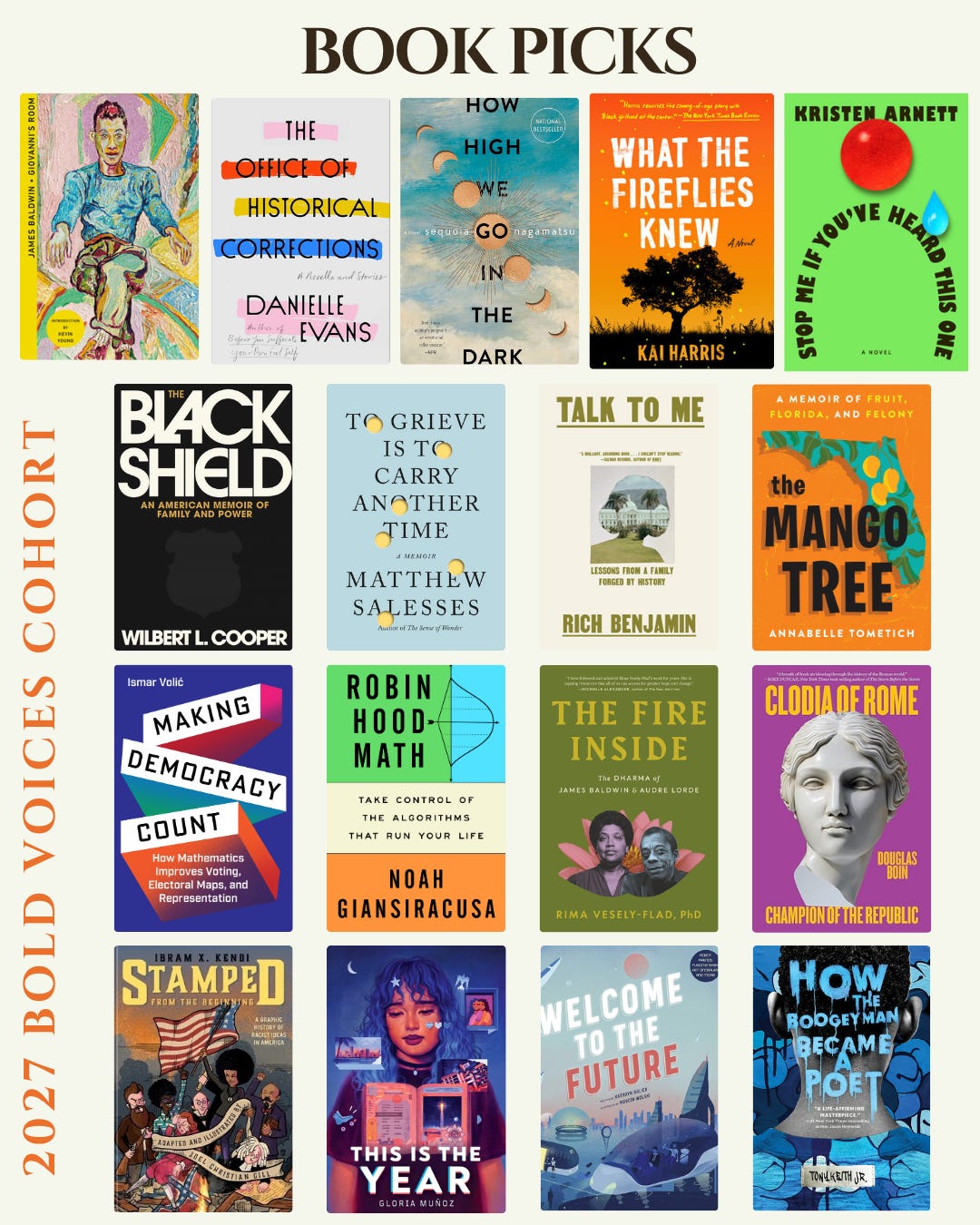
If you’re looking for a bold voice to feature at your next big event and spark thoughtful dialogue with your audience, we’ve got you!
We decided to ask speakers and authors we admire to join the 2027 Bold Voices Cohort because we believe in the power of human stories, of reading, and of truth-telling. To us, the oral arts are a beacon of hope and a banner for community.
Yet it’s clear that support for events featuring storytellers and conversation leaders is currently splintering, causing many organizations to reduce or eliminate life-changing programming and moments of connection. It’s a cultural crisis to reduce community-building events at a moment defined by so much uncertainty and disconnection.
We know budgets are tight right now and that many event hosts have few options. In recent years, booking a nationally-acclaimed author and speaker for an event has ballooned to a five-figure investment on average, and for many institutions this kind of investment is now out of reach without additional support.
That’s why we decided to do something bold: Carefully curate an author and speaker cohort to fill the gap left by recent shifts in funding and the need for timely, genuine dialogue about what matters.

This catalog highlights 17 courageous voices we think your community deserves to hear from in 2027. These talented storytellers and acclaimed experts do not shy away from sparking essential conversations about timely topics, they lean in. Every speaker featured here is paired with a recommended book and potential event ideas to help you find the right match for your next event. Most importantly, every author in this catalog has committed to considering invitations at a flat, transparent support level to help you make the most of your limited budget and encourage you to continue hosting events for your community despite funding challenges.
We’re here to empower you by connecting you with the authors and speakers whose ideas and stories will help your audience understand the world we live in and how we might participate in making it better. Here’s to cultivating curiosity and community together in 2027!
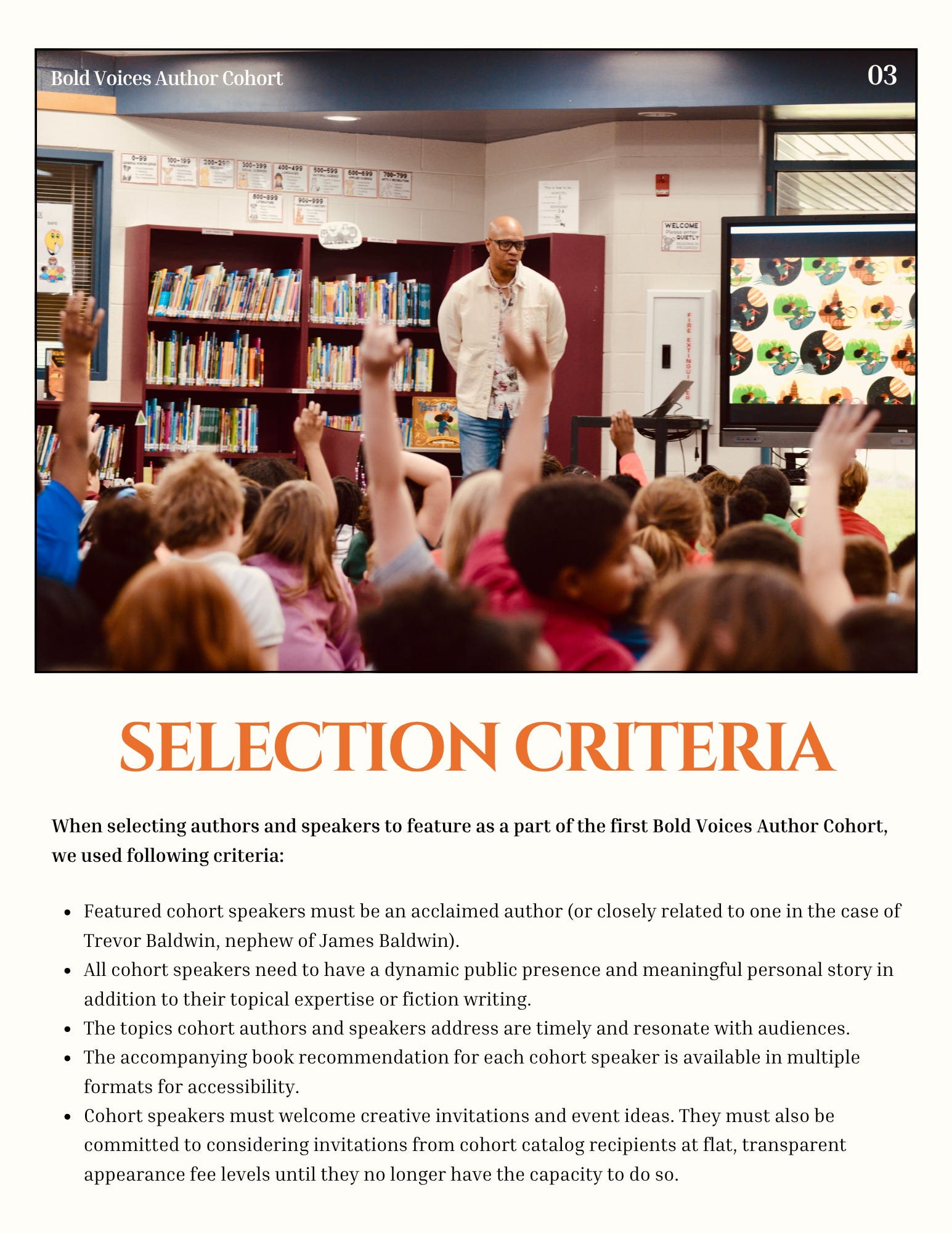
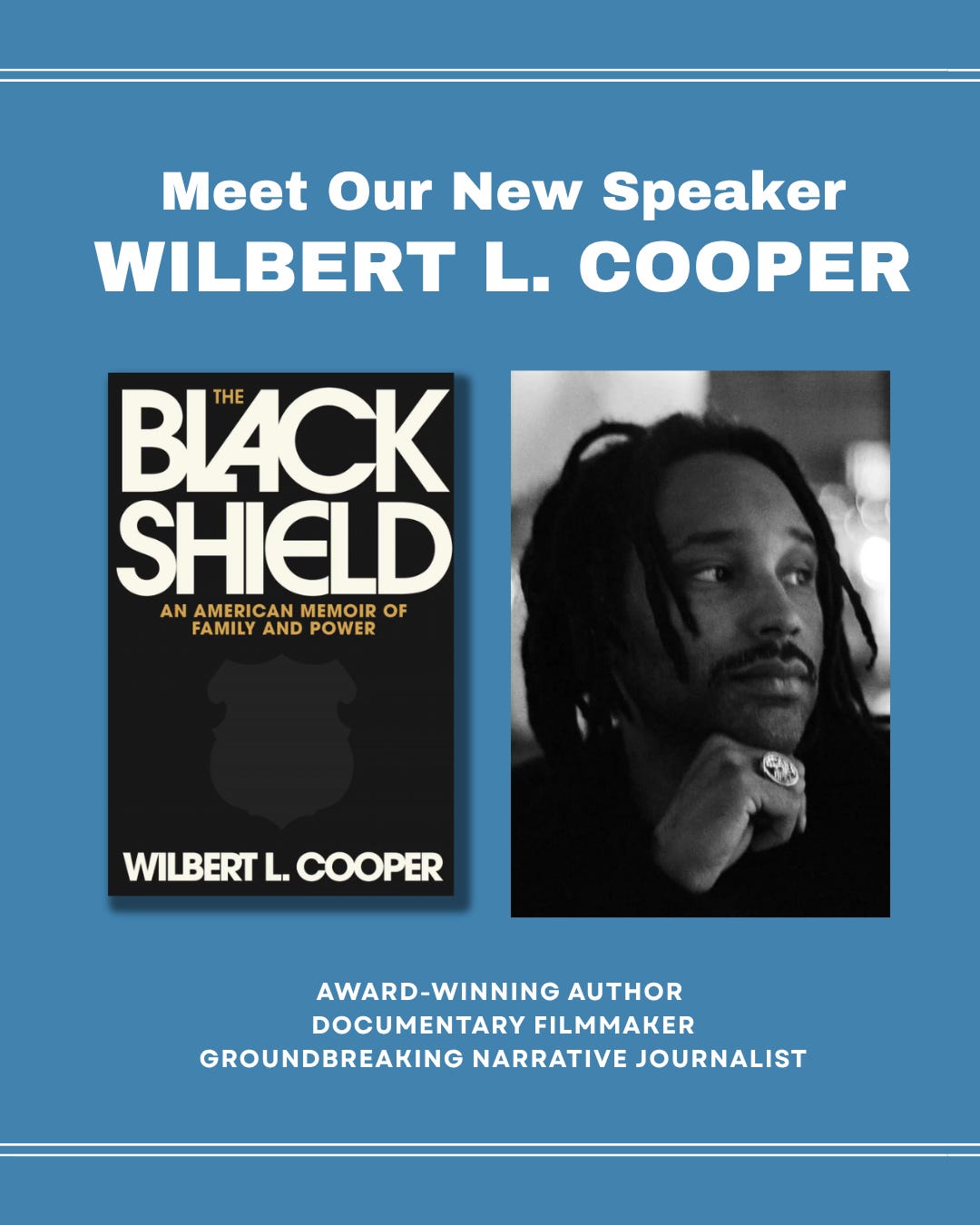
Award-winning author, documentary filmmaker, and groundbreaking narrative journalist Wilbert L. Cooper welcomes 2027 event invitations!
An award-winning writer and filmmaker, Wilbert L. Cooper has told stories everywhere from the page to the screen, including his VICE documentary, The Cleveland Strangler, which was nominated for a National Magazine Award. He brings that same versatility to the stage, with a passion for multimedia storytelling. We’re thrilled to support him as a speaker and introduce him to event hosts!
Wilbert’s debut memoir, The Black Shield: An American Memoir of Family and Power, released to much acclaim in August, including an in-depth New York Times book review under the heading A Son of Black Cops Asks What It Means to Be Both Target and Enforcer. The NYT reviewer reflects: “In an evocative new memoir, the journalist Wilbert L. Cooper explores history, and paradoxes, of race and policing in Cleveland, his hometown.” We think Wilbert’s book is an essential exploration for event hosts because it peels back the layers of the startling story of the Black Shield, a Black police organization in Cleveland, while simultaneously tracing Wilbert’s own family’s journey into law enforcement.
“The result is an eloquent, enraging, earnest, often hilarious history of what it means to be Black and blue in Cleveland.” —Robin D. G. Kelley
Watch Will’s book launch event where he talks about the what it means to be “free, unafraid, and unguarded” today and why “policing isn’t just a threat to Black people”:
WILBERT’S EXPERTISE
Race and Policing in America
Narrative Journalism
Documentary Filmmaking
Music and Counter Culture
Fashion and Style
Cinema
POPULAR TALKS & EVENTS
ART AND WAR: Meditations on the urgency and importance of storytelling and expression during an era marked by extreme violence and widespread oppression
HISTORY LESSONS: Reflections on the urgent messages of the past and how to apply those to today’s fight for freedom
SELLING OUT: Exploring what it means to be captured by oppressive systems that reproduce violence and inequality, and how we can claw our way out
MINING THE PAST WORKSHOP: Techniques and Tools for Excavating Memories and Turning Them into Storytelling
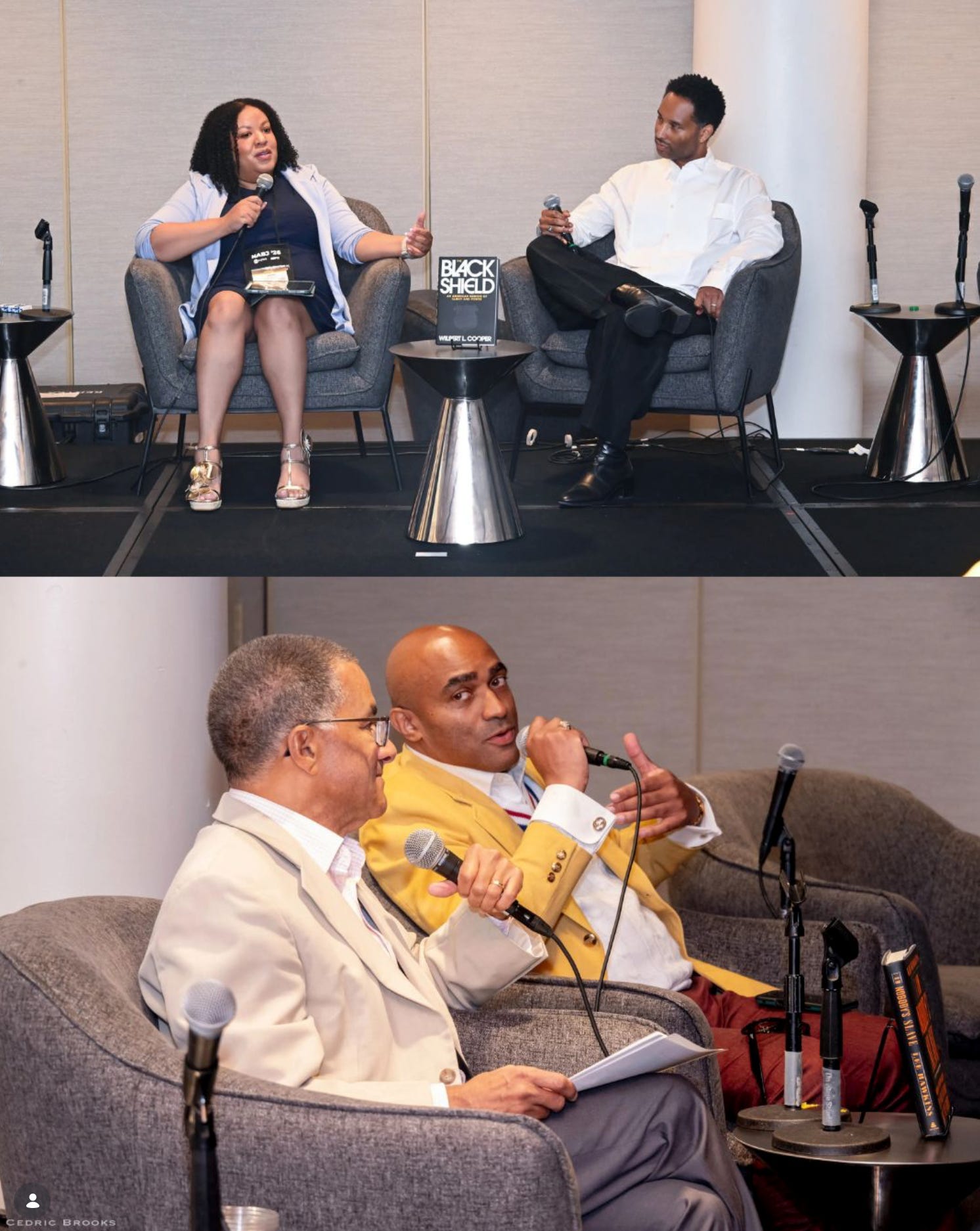
We’re especially proud to announce that Wilbert L. Cooper and another PLM featured speaker, Lee Hawkins, both recently received Outstanding Book Awards at NABJ’s 2026 Authors Showcase! 🎉📚
Will was honored for his extraordinary debut book, The Black Shield: An American Memoir of Family and Power.
Lee was recognized for his harrowing and vital memoir, I Am Nobody’s Slave: How Uncovering My Family’s History Set Me Free, a powerful account of his family’s legacy of post-enslavement trauma and resilience and also a debut book.
Both memoirs address how to break oppressive cycles and the proactive steps we can take toward lasting healing. We highly recommend their books as a focal point for events with a wide range of audiences.
Quote of the Month: Why We Need Radical Honesty Right Now
“Even if you revile these disruptive forces and lament the collateral damage they are needlessly causing, as I do, I believe we will come out of this disruptive era for the better. And I believe the way to do that is to be radically honest with ourselves, our students, and the public we serve about every aspect of our craft…”
―Noah Giansiracusa, on the importance of “backward design” in a Boston Globe Ideas feature on How to Save Higher Education
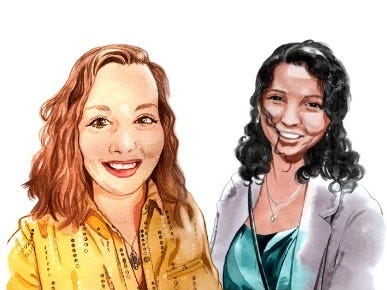
Katharyn and Karuna of PLM